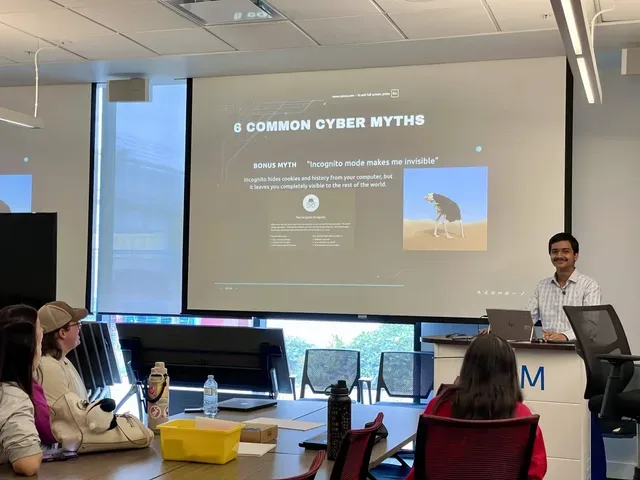
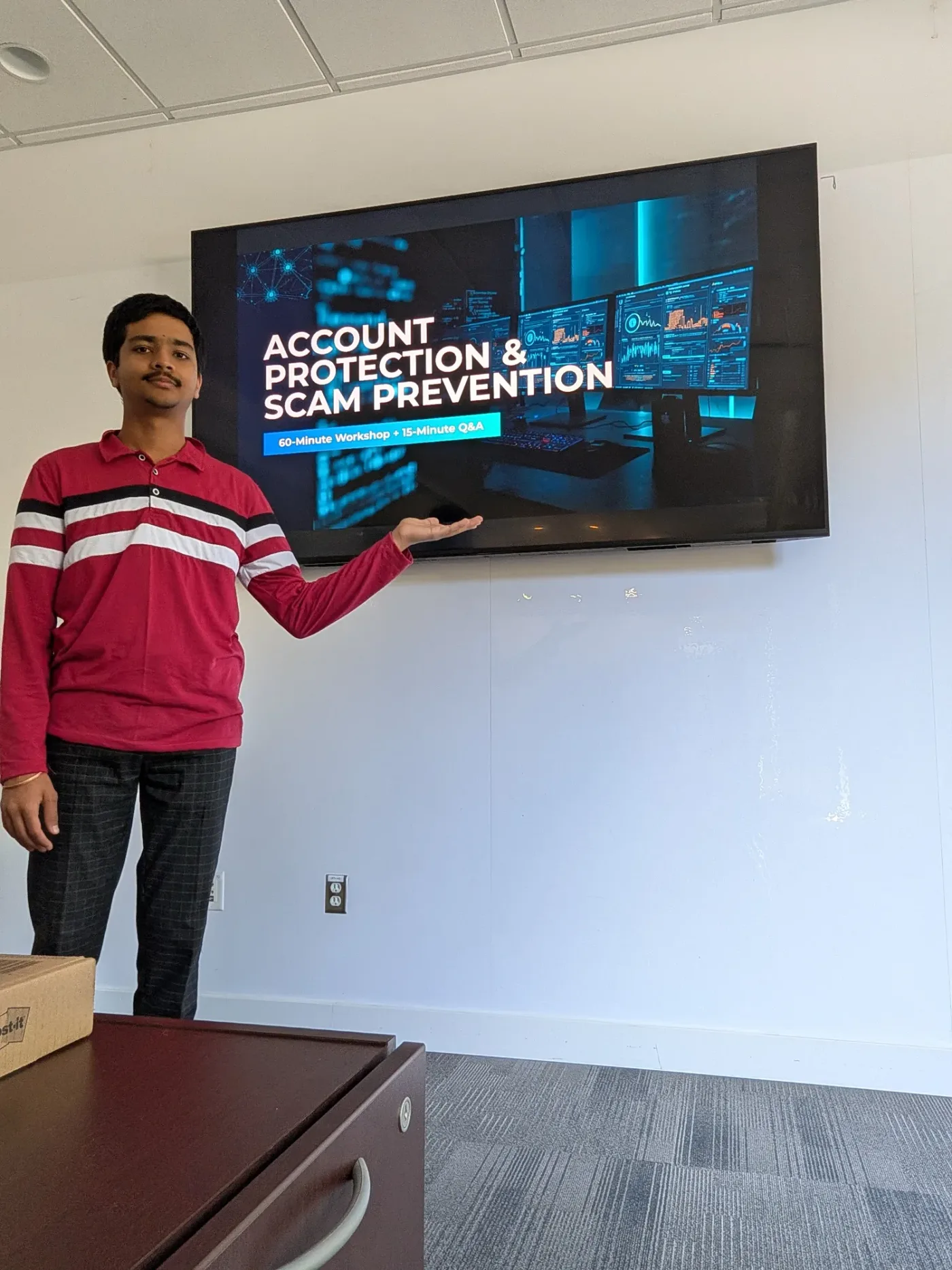
Centre for Digital Media

Cyber Safety Workshop Series

  • June 2026
  • College students
  • Four in-person workshops
  • 90 minutes each, June 15 to 24

Photos

A four-part series covering cyber safety myths, digital footprint and device safety, account and scam protection, and what to do after something goes wrong.

Four sessions, each standing on its own but building toward the same thing: knowing what to do rather than just what to fear. The tone stayed practical and blame-free throughout, so people asked questions openly rather than staying quiet about a mistake they had already made.
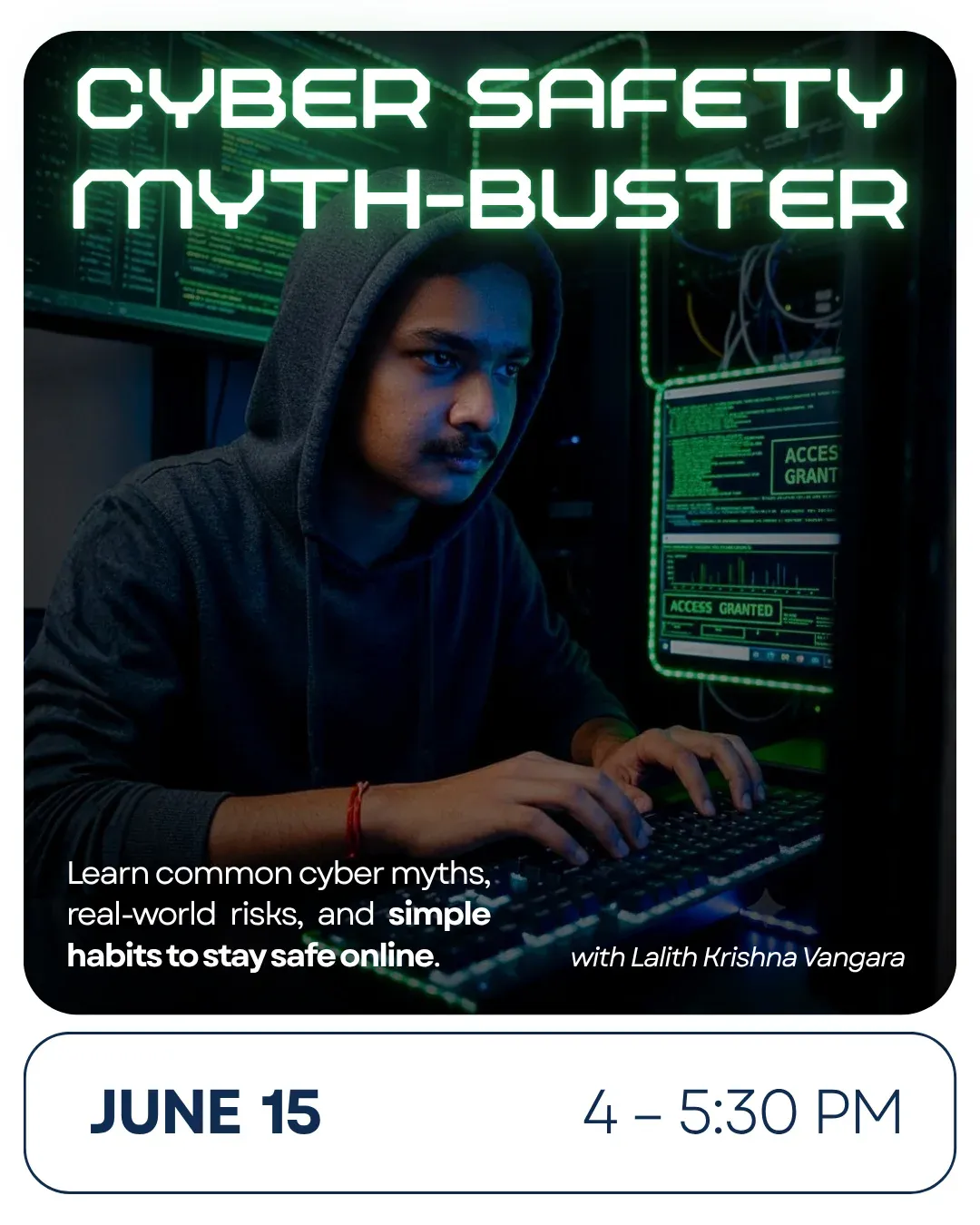
  1. Poster for Cyber Safety Myth-Buster, June 15, 4 to 5:30 PM. Learn common cyber myths, real-world risks, and simple habits to stay safe online.

    June 15

    Cyber Safety Myth-Buster

    Took on the advice people already carry around: that changing your password monthly helps, that antivirus alone is enough, that attackers only target large organisations, that a padlock icon means a site is trustworthy. Each myth was paired with what to do instead.
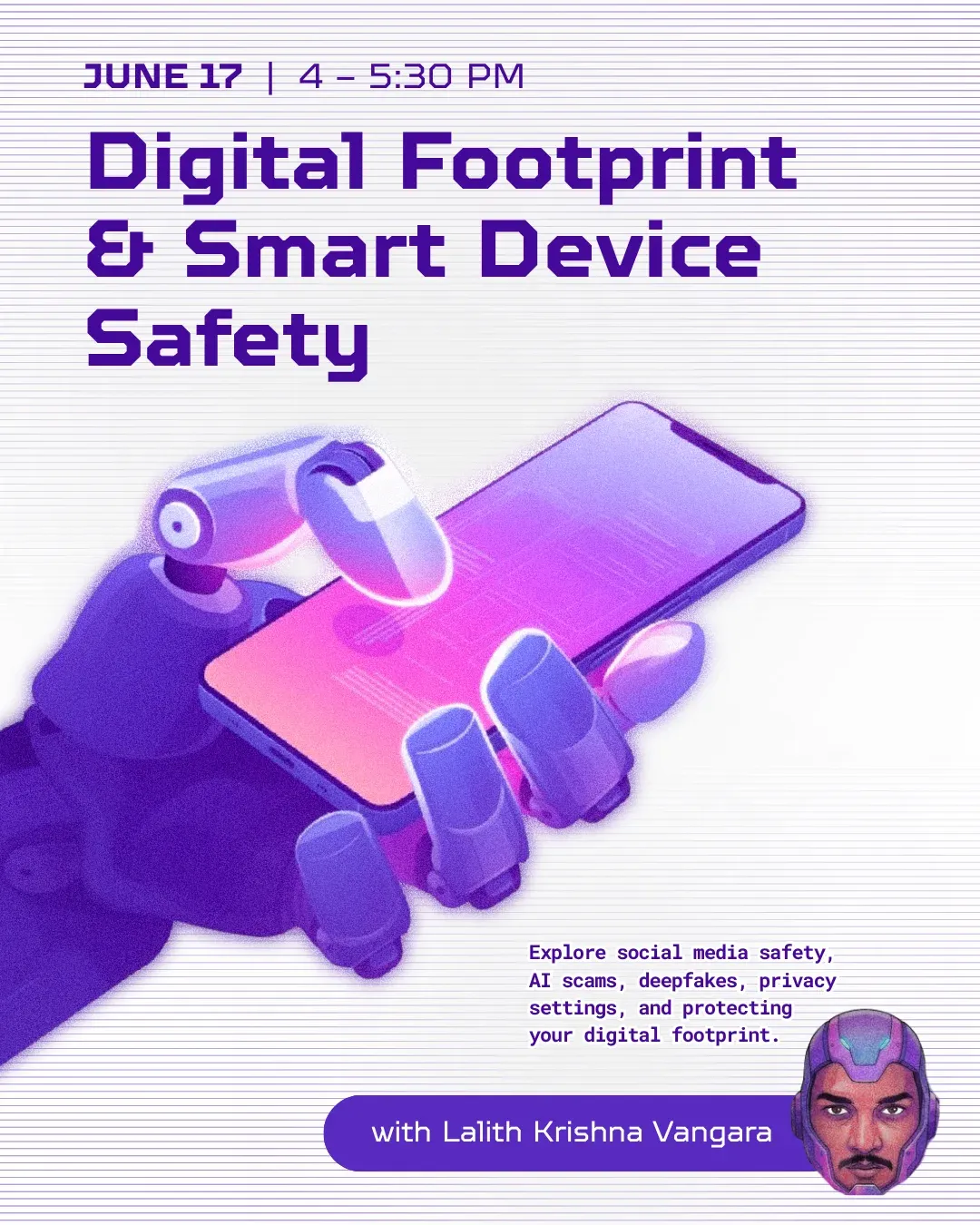
  2. Poster for Digital Footprint and Smart Device Safety, June 17, 4 to 5:30 PM. Explore social media safety, AI scams, deepfakes, privacy settings, and protecting your digital footprint.

    June 17

    Digital Footprint and Smart Device Safety

    Social media and photo sharing, what open-source intelligence can turn up about someone, AI-generated scams and deepfakes, app permissions, and the settings worth changing on a phone.
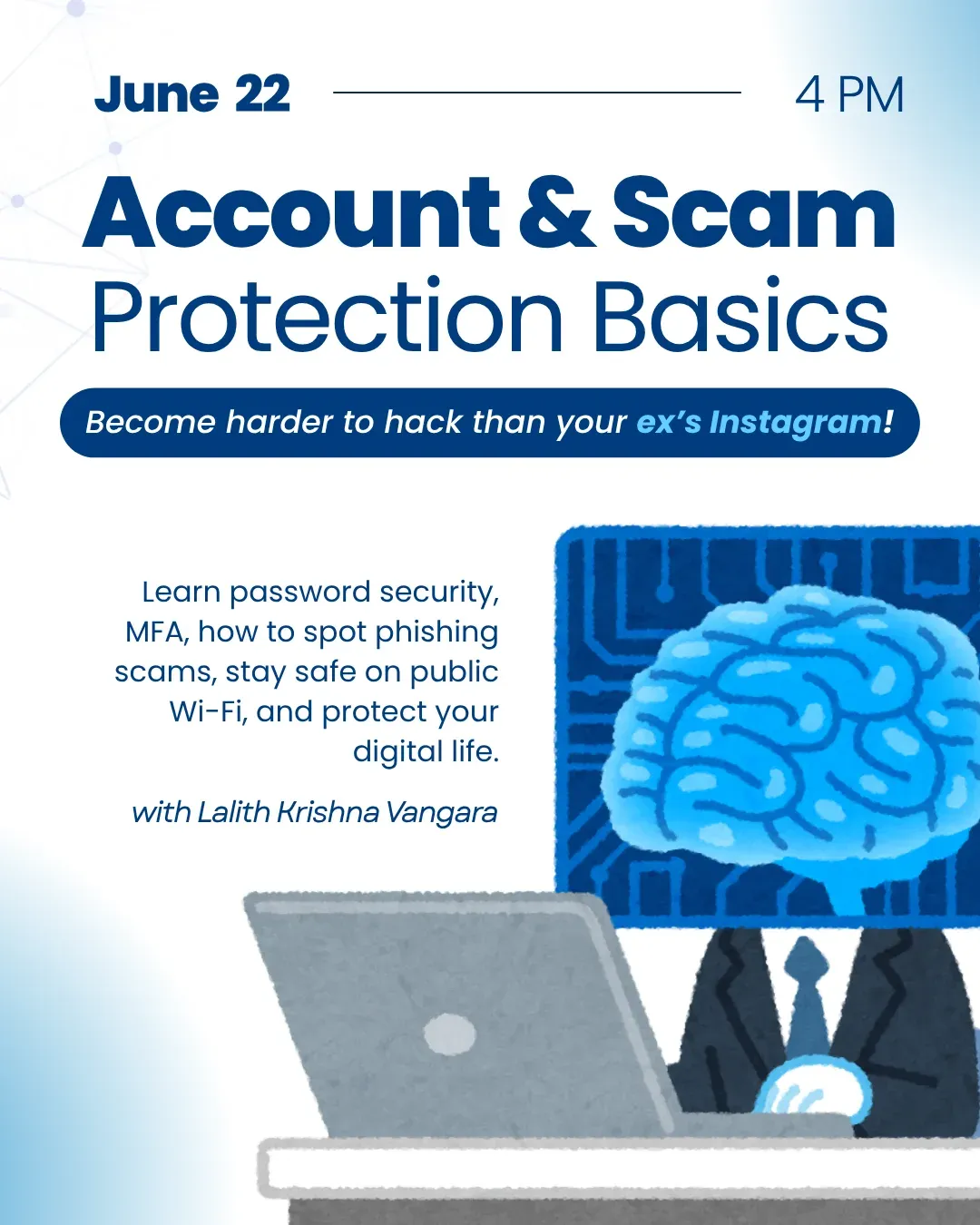
  3. Poster for Account and Scam Protection Basics, June 22 at 4 PM. Learn password security, multi-factor authentication, how to spot phishing scams, staying safe on public Wi-Fi, and protecting your digital life.

    June 22

    Account and Scam Protection Basics

    Passwords and multi-factor authentication, staying safe on public Wi-Fi, recognising phishing, safe email habits, and QR code safety.
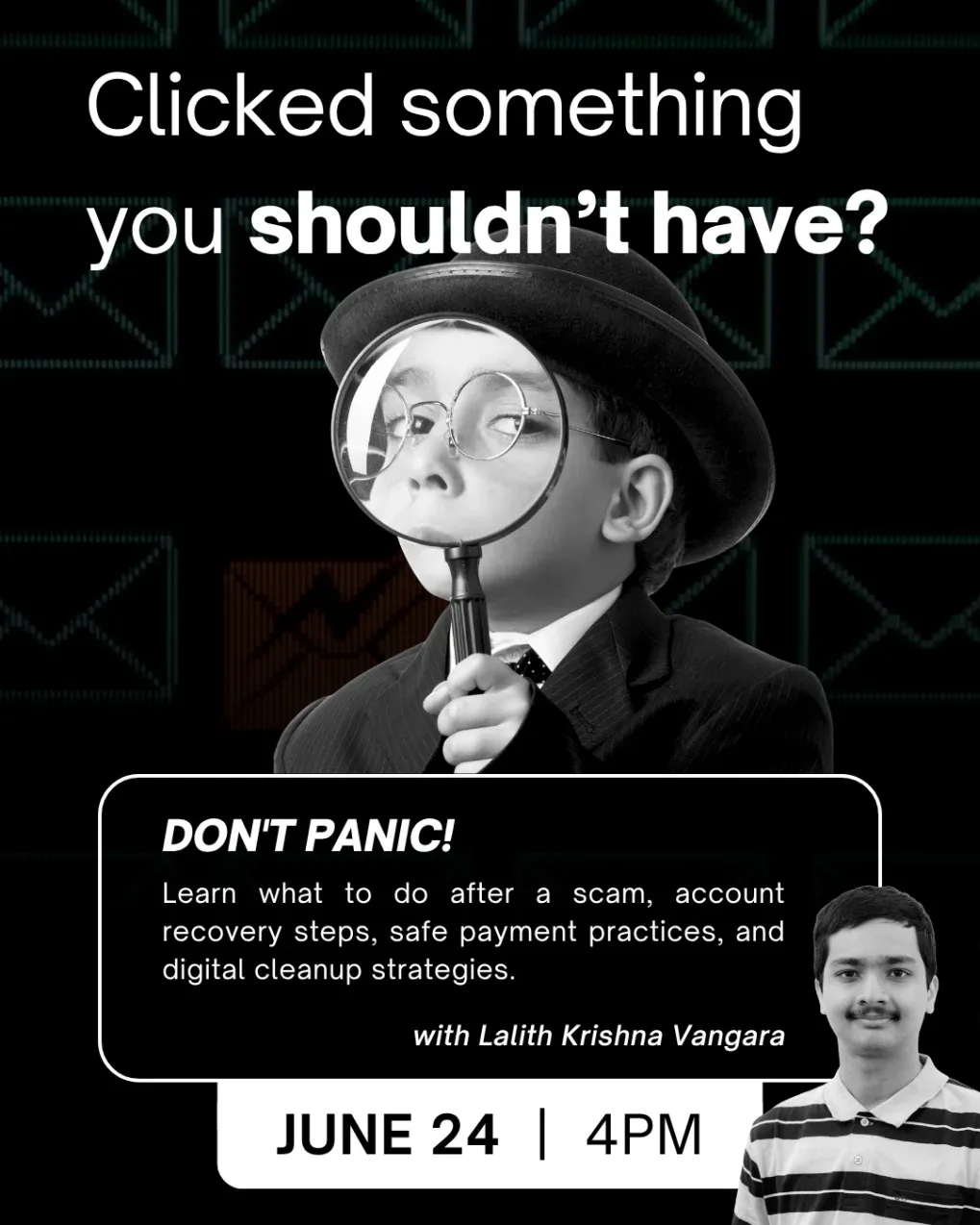
  4. Poster for Scam Response and Digital Cleanup, June 24 at 4 PM. Learn what to do after a scam, account recovery steps, safe payment practices, and digital cleanup strategies.

    June 24

    Scam Response and Digital Cleanup

    What happens after something goes wrong: safe payments, recovering an account, reporting a scam, and cleaning up once suspicious activity has been found.

Outcome

Students left able to name the habits that actually matter, recognise the myths that crowd them out, judge online risk without guesswork, and act quickly if an account or payment is compromised.
Langara College

Ethics in Scientific Literature

  • March 2026
  • College students
  • In-person guest lectures
  • Three class sessions

Photos

A beginner-friendly guest lecture showing how research ethics, evidence quality, and scientific communication affect public trust and everyday decisions.

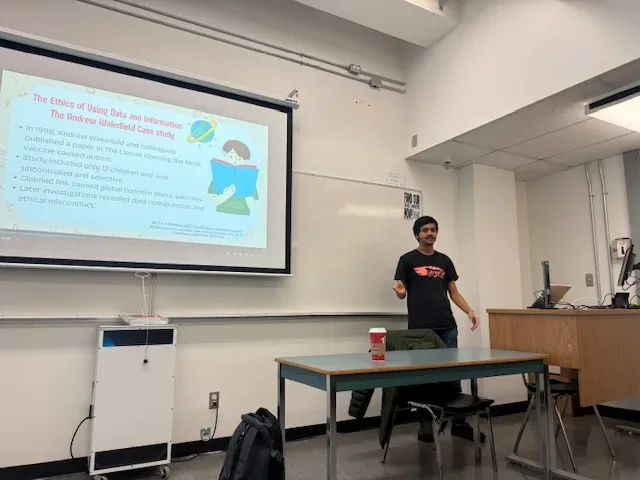
This guest lecture approached research ethics as an everyday skill rather than an academic formality. Students looked at how a claim travels from a study, to a press release, to a headline, and where accuracy tends to get lost along the way.

The session avoided naming or criticising specific researchers. Instead it used composed examples so the group could practise asking the same questions they would need for any claim they encounter: who funded this, what was actually measured, how large was the sample, and does the headline match the finding.

What it covered

  • Ethical and unethical research practices
  • How weak evidence can spread misinformation
  • Why clear scientific communication matters
  • Applying ethical thinking to real examples

Outcome

Students learned to distinguish ethical and unethical research practices, recognize how weak evidence can spread misinformation, and discuss scientific claims more critically.

Want your organisation on this page?

Sessions are booked a few weeks out. Tell me about your group and we can find a date.